

There are two ways to see Wayanad.
You can wait for the rain to stop, for the roads to dry and for the skies to clear.
Or you can come when the rain is still part of the landscape.
During the monsoon, Wayanad becomes quieter, greener and a little more mysterious. The hills disappear behind clouds, streams begin running through the forest, and mist settles over the roads and valleys. At times, the rain comes down heavily. At other times, it passes as quickly as it arrived, leaving behind wet leaves, cool air and a forest that seems to have become a shade greener.
So, is Wayanad worth visiting during the monsoon?
Yes, if you enjoy nature, rain and slower travel. But it is not the right season for everyone.
The important thing is to know what a monsoon holiday in Wayanad is actually like before you book one.
When is the monsoon in Wayanad?
The main southwest monsoon generally runs from June to September. Kerala also receives another rainy season from around October to November. (Kerala Tourism)
June, July and August can bring periods of heavy rain, while September can feel more transitional, with the landscape still carrying the deep green of the monsoon but with changing weather patterns.
There is no simple rule that says it will rain all day.
Kerala Tourism describes the monsoon as a mixture of rain and breaks of sunshine. Sometimes there may be a few hours of rain followed by a clear spell; during stronger weather systems, the rain can continue for much longer. (Kerala Tourism)
That unpredictability is part of the experience.
What does Wayanad look like in the monsoon?
This is probably the best reason to visit.
The forests become intensely green. Water begins appearing in places that may be dry at other times of the year. Hillsides turn darker with wet vegetation, clouds hang low over the Western Ghats and mist moves through the higher parts of Wayanad.
If you enjoy photography, birdwatching or simply being outdoors without the heat of summer, there is plenty to notice.
And you don’t always have to be doing something.
One of the pleasures of a rainy day in Wayanad is simply watching it rain.
A cup of coffee by a window. The sound of water on the leaves. Mist moving across the trees. A short walk when the rain eases. These are small things, but they are often what people remember about a monsoon trip.
Kerala Tourism also describes the rainy season as a good time for slower travel, nature walks, birdwatching and experiencing the landscape without rushing from one attraction to another. (Kerala Tourism)
What can you do in Wayanad during the monsoon?
You can still explore Wayanad, but you need to be a little more flexible.
Some experiences work beautifully in the rain.
Forest walks and nature experiences can be particularly rewarding when conditions are suitable. The forest is alive with sound, and there is much more to notice when you stop looking only for the big attractions.
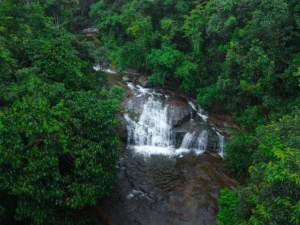
Waterfalls and streams can become much more impressive during the rainy season. But this is also where caution matters most. Water levels and conditions can change quickly, and an attraction that is enjoyable on one day may be unsuitable on another.
Plantations and viewpoints are another good option when the weather allows. Even a short drive through the hills can be beautiful when the landscape is wrapped in mist.
And then there are the experiences that don’t depend on the weather at all.
A long breakfast. Reading in your room. Talking with family or your partner. Sitting somewhere quiet and letting the afternoon pass.
A good monsoon holiday doesn’t need to be packed with activities.
What about sightseeing?
This is where you need to adjust your expectations.
If your idea of a holiday is to visit ten places in two days, the monsoon may frustrate you.
Rain can slow down road journeys, reduce visibility and make some outdoor activities difficult. During periods of particularly heavy rainfall, authorities may restrict access to certain roads, trekking routes or tourist attractions. Wayanad has seen such restrictions during periods of intense rain in 2026. (Onmanorama)
So don’t build a monsoon itinerary that leaves no room for change.
Choose a few places you genuinely want to see. Keep some free time. Check the weather before setting out. And if local authorities have restricted access to an area, don’t try to work around the restriction.
The mountains will still be there tomorrow.
Is it safe to travel to Wayanad during the monsoon?
For most travellers, the answer depends less on the word monsoon and more on the weather conditions on the day you travel.
Wayanad is a mountainous district, and heavy rain can create risks including landslides, rockfalls, poor visibility and difficult road conditions. Recent weather events have led to temporary restrictions on some ghat roads and outdoor activities. (Onmanorama)
That doesn’t mean the whole of Wayanad becomes inaccessible during the rainy season.
It does mean you should travel responsibly.
Before leaving, check the latest weather warnings and local travel advisories. If you’re driving up through the Western Ghats, allow extra time and drive carefully in poor visibility. Avoid waterfalls, trekking routes and other outdoor areas when authorities or local operators advise against visiting them.
And don’t treat a beautiful photograph from yesterday as proof that a place is safe today.
Monsoon travel is best when you respect the weather rather than trying to defeat it.
What should you pack for a Wayanad monsoon trip?
You don’t need to pack your entire house.
A few things make a big difference:
- A good rain jacket or umbrella
- Waterproof or quick-drying footwear
- Extra clothes
- A small waterproof bag for phones and cameras
- Mosquito/insect protection
- A light jacket for cooler evenings
- Shoes with a good grip if you plan to walk outdoors
And perhaps the most important thing: leave some room in your plans.
The weather may decide what your afternoon looks like.
Is September a good time to visit Wayanad?
September can be an interesting month for travellers who want to experience Wayanad while the landscape is still deeply green.
It is still within the southwest monsoon period, but conditions can vary considerably from week to week and even from one part of Wayanad to another. So rather than choosing September simply because someone has called it the “best month”, look at the actual weather forecast closer to your travel date.
If the forecast gives you reasonable weather windows, September can be a lovely time for a quieter Wayanad holiday.
And if you happen to get rain?
That’s not necessarily a problem.
You just need to have planned a trip where rain isn’t considered a failure.
What kind of traveller will enjoy monsoon Wayanad?
You will probably enjoy it if you:
- Like forests, hills and greenery
- Enjoy photography or birdwatching
- Don’t mind getting caught in a little rain
- Prefer quiet holidays over busy sightseeing
- Enjoy spending time at your resort
- Are comfortable changing plans when the weather changes
- Want to experience Wayanad when it feels particularly green and alive
You may want to choose another season if you:
- Want guaranteed outdoor activities every day
- Have a very tight sightseeing schedule
- Don’t enjoy rain
- Are uncomfortable with wet roads and changing weather
- Are travelling specifically for activities that may be suspended during heavy rain
There is no universally best time to visit Wayanad.
There is only the best time for the kind of holiday you want.
Staying in Wayanad during the rain
Where you stay becomes more important during the monsoon.
When you’re spending more time at your accommodation because of the weather, the stay itself becomes part of the holiday rather than simply a place to sleep.
This is where a rainforest stay can make a difference.
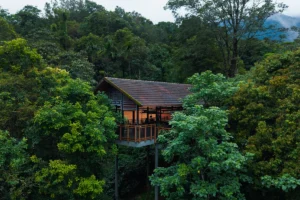
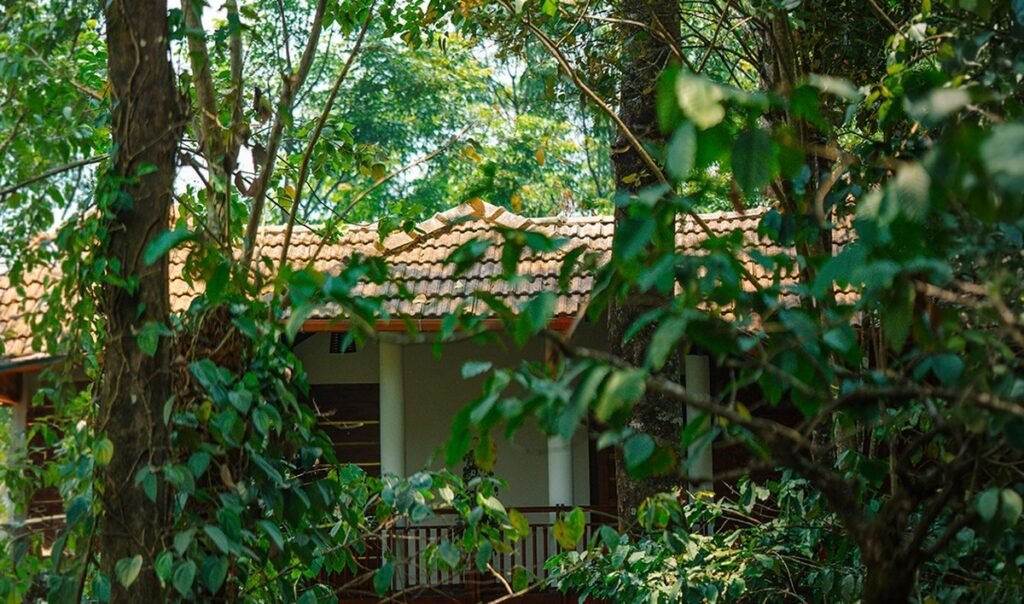
At Vythiri Mist, in the Western Ghats of Wayanad, the forest isn’t something you drive past on the way to a sightseeing spot. It is part of the setting around you.
At around 3,000 feet above sea level, misty mornings, rain, forest sounds and the changing landscape are part of the experience.
There may be a morning when you wake up and can’t see very far because the mist has settled around the trees.
Then, an hour later, it lifts.
The forest appears again.
That’s one of the simple pleasures of visiting Wayanad in the monsoon. You don’t have to keep looking for something spectacular. Sometimes the weather changes the view in front of you.
So, should you visit Wayanad during the monsoon?
If you are looking for perfect weather and a tightly planned sightseeing holiday, probably not.
But if you want to see Wayanad at its greenest, hear the forest in the rain, wake up to mist and give yourself permission to slow down, then yes.
Just come prepared.
Check the weather. Check road conditions. Keep your itinerary flexible. Respect local restrictions. Carry the right clothes.
And leave some time to simply sit and watch the rain.
Because that is perhaps the biggest difference between a monsoon trip to Wayanad and a regular holiday here.
You don’t always have to go looking for the experience. Sometimes, it comes to you with the rain.